Jump to:
November 2026 Elections








State House of Representatives




Eric Jacobs


Lawrence Ross Moore


Joe Flynn











Ballot Initiatives
View all Proposed 2026 Ballot Issues
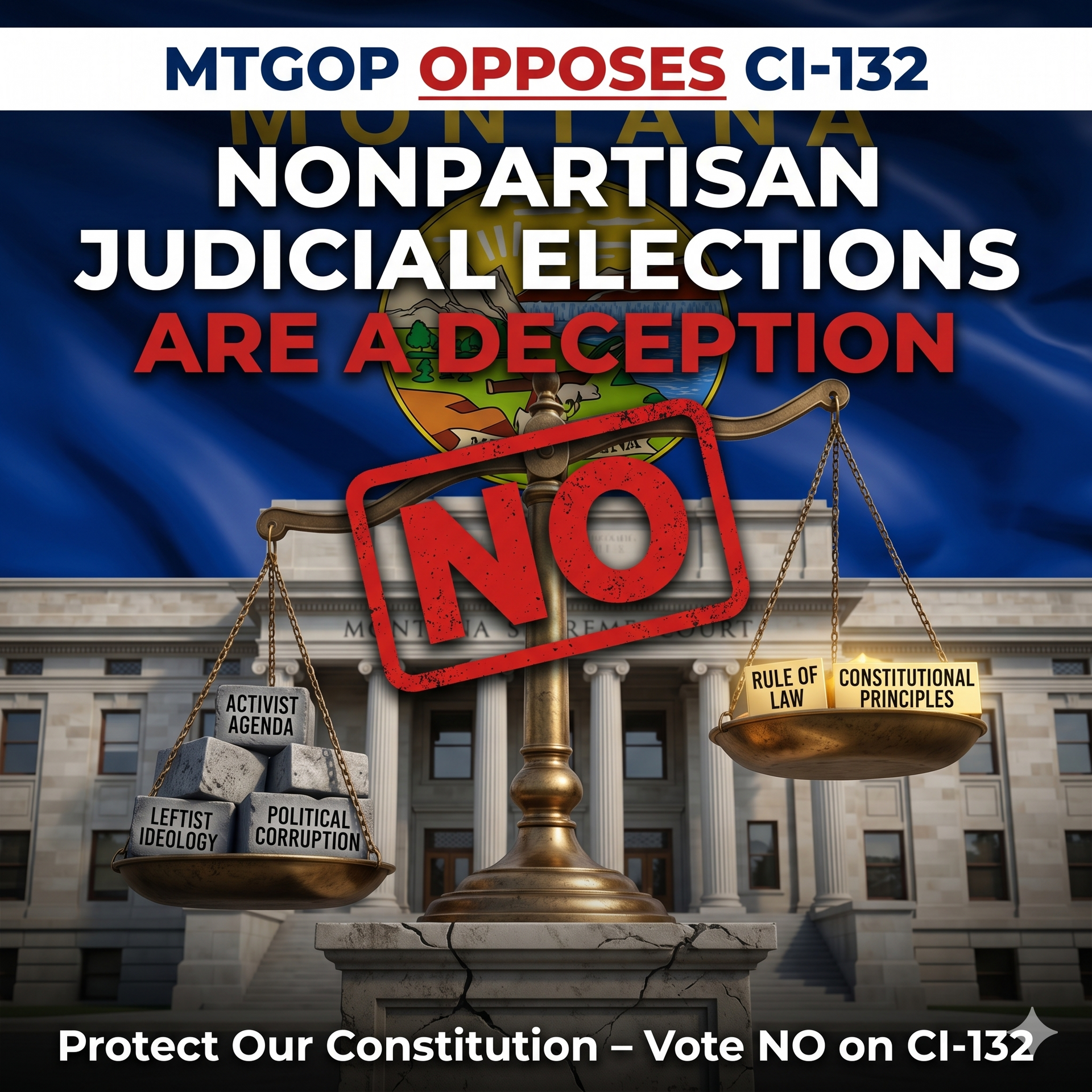
CI-132
Vote NO
Amends the MT Constitution to require judicial elections remain nonpartisan.
- Keeps voters in the dark by not knowing the judicial philosophy of candidates
- Protects Activist Judges - lets them hide behind false veil of "nonpartisan" label
- Defies freedom of speech and association - prevents them from exercising their constitutional right to freely speak and associate with parties if they so choose.
- Lack of Transparency
- MTGOP officially opposes
- Further evidence of the partisan, Democrat nature of CI-132 is the coalition of organizations bankrolling efforts pushing for CI-132 in Montana. These include, among others: Montana Federation of Public Employees, ACLU of Montana, Catalyst Montana, Forward Montana, Fireweed Campaigns, and Big Sky 55+; all of which are organizations funded by a network of billionaire, out-of-state, far Left donors and dark money interests.
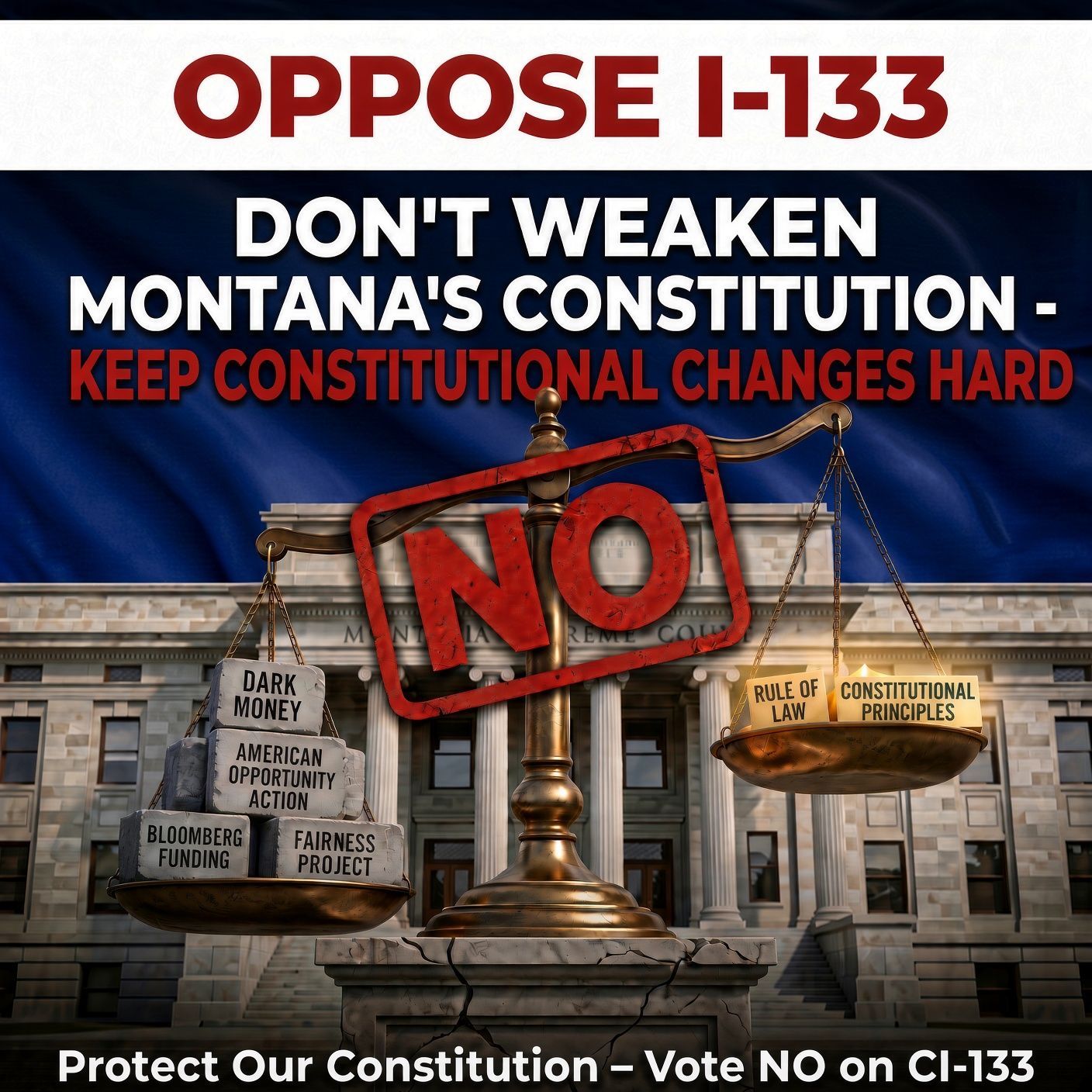
I-133
Vote NO
Changes the MT Constitution removing requirements on Ballot Initiatives
- Promoted/funded by leftist "dark $$" groups outside of MT and MT ACLU
- Seeks to loosen the guardrails to make changing our MT Constitution easier
- Circumvents our Elected Legislature
- Opens the Constitution to agenda-driven measures that would fail in the Legislature and with the public
I-194
Vote NO
The Montana Plan - It's a trick! Attempts to remove outside corporate $$ from MT elections, but fails drastically
- Funded by a "dark money" nonprofit called "Transparent Election Initiative" who intentionally conceals its donors. Promoted by AOC, Pete Buttigieg, Sam Forstag, and Jon Tester.
- Also being pushed in New York, California, Colorado, and Hawaii
- Would strip MT businesses and associations of their 1st Amendment speech rights, while empowering out-of-state billionaires with unrestricted spending in MT's elections through indirect contributions, lobbying and advocacy, and collaborative efforts.
- MT Chamber of Commerce Publicly Opposes I-194 as does the MTGOP
- Raises serious Constitutional concerns and likely challenged under the U.S. Supreme Court Citizens United ruling (2010).
- "While cleverly named “The Montana Plan”, I-194 should be called the “California Plan” since California is home to more than 200 individual billionaires and places no restrictions whatsoever on out-of-state wealthy individuals. Under I-194, a single well-funded outsider could bankroll a campaign to devastate a Montana agricultural practice, a logging operation, or a ranching family, while the Montana businesses under attack would be legally silenced. That is not campaign finance reform. That is a one-sided disarmament of Montana’s own voices."
Gallatin County Ballot Issues
Should we change county elections from partisan to nonpartisan? NO
VOTE to continue running County Elections on a Partisan Basis. Why?
- Moving to nonpartisan statistically reduces voter turnout in general and local elections by an average of 10 to 15 percent.
- Nonpartisan allows candidates to be vague in expressing their ideology and governance philosophies to get elected. Lack of Transparency! Once elected, they can govern from a different mindset.
- Government accountability is strengthened when voters have more information, not less. Partisan elections give voters crucial information they need to determine not only who to vote for, but also who to hold accountable for poor governance.
- It creates 2 types of voters: Informed and Uninformed - who often then are tasked with determining which name on a ballot may represent their views. This often becomes based on name recognition and other demographics leading to an increased incidence of mistaken crossover voting. (Voting opposite of what you normally would, instead of an alignment of beliefs denoted by a party label.)
- Currently in Gallatin County Elections, you can choose to run as an Independent or a third party, giving candidates and voters a variety of options that already exist.
Bozeman Government Ballot Issues
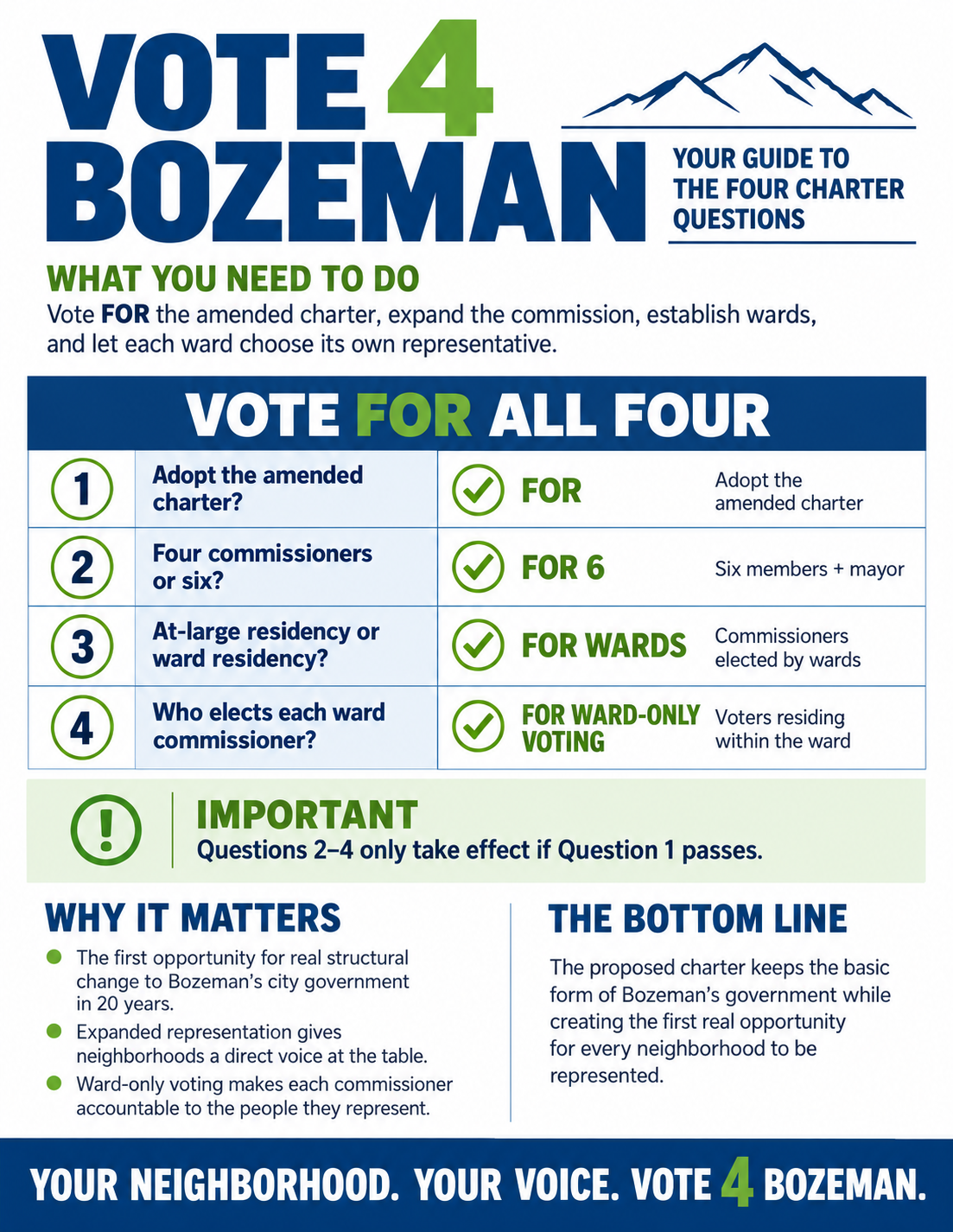
On your November 3, 2026 ballot, Bozeman asks four related questions from the city’s first local government review in 20 years: one on the amended city charter, and three on how the City Commission is structured and elected. Answer all four.
The three sub-options take effect only if the amended charter passes. If the charter fails, the sub-options fail with it—even if they win on their own. If the charter passes, it and any approved sub-options take effect July 1, 2027, with some changes phased in through 2029–2030.
What you need to do: Vote yes on the amended charter, expanding the commission, establishing wards, and letting each ward elect its own representative.